IFS Therapy In Mesa, Arizona
IFS Therapy at Creative Path Therapy is designed for adults & teens struggling with trauma, anxiety, emotional shutdown, people-pleasing, or intense inner conflict. If you’re seeking deeper healing, begin your therapy journey with us today with support.
Internal Family Systems therapy has become one of the most trusted trauma-informed approaches for people who want to understand themselves on a deeper level. At Creative Path Therapy, we offer IFS therapy for individuals, teens, couples, and families who are ready to explore their emotional world in a safe, compassionate, and creative environment.
Our practice supports clients across Mesa and nearby areas including Chandler, Gilbert, and Tempe. Whether someone is working through trauma, anxiety, relationship difficulties, spiritual wounds, or major life changes, IFS provides a gentle yet transformative way to reconnect with the parts of themselves that have been overwhelmed, blocked, or pushed aside.
Creative Path Therapy combines the depth of IFS with Expressive Arts, EMDR, Sand Tray, DBT skills, Sensorimotor, and Eco-Therapy. This unique blend creates a supportive healing experience that clients of all ages can access with comfort.
Meet Your Ideal Team for IFS Therapy
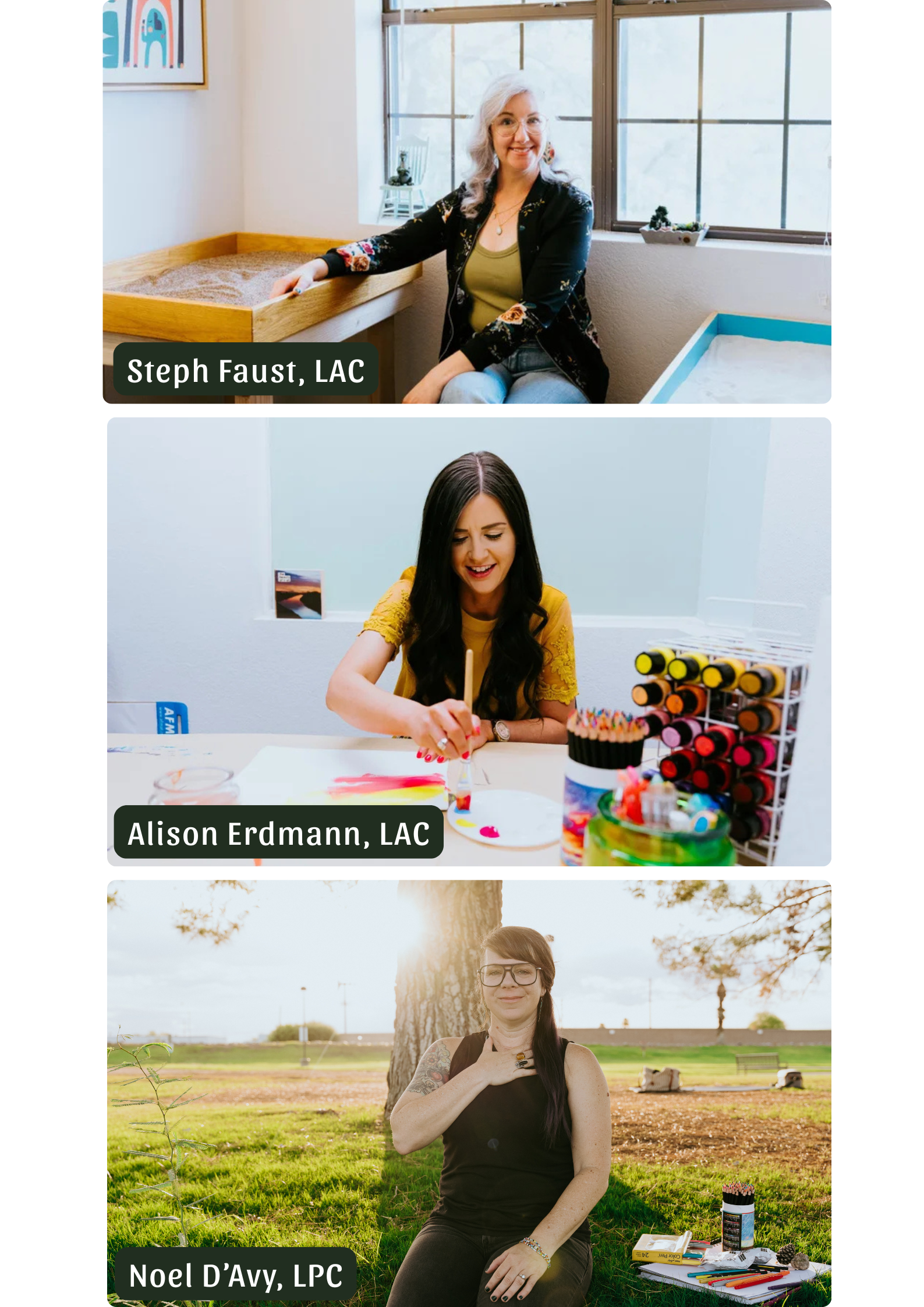
Creative Path Therapy is staffed by clinicians with advanced training in IFS Tray Therapy.
| Therapist | Intake session | Standard session |
|---|---|---|
| Steph Faust, LPC | $175 | $155 |
| Alison Erdmann, LAC | $145 | $125 |
| Low-Fee Openings | — | $50–$100 (limited availability) |
Low-fee slots require a consultation and may involve a waitlist.
Payment Options:
Credit card • Cash • Check • Thrizer
Policies:
24-hour cancellation policy | $75 fee for late cancellations/no-shows
Who Benefits from IFS Therapy

IFS therapy is suitable for teens through seventy at Creative Path Therapy. It supports teens navigating identity struggles and experiencing emotional overwhelm and traumatic incidents, adults healing from trauma, couples repairing relational patterns, and families trying to rebuild connection.
Clients often seek IFS when struggling with concerns such as:
Anxiety and chronic worry
Depression or emotional numbness
PTSD and complex trauma
Relationship difficulties
Childhood abuse or neglect
Stress during major life transitions
People-pleasing or perfectionism
Spiritual trauma
Domestic violence history
Identity struggles, including LGBTQIA+ needs
Attachment wounds and emotional triggers
IFS offers a grounded mindful way to work through these experiences without feeling pressured or judged. It is especially effective for clients who feel disconnected from their emotions or overwhelmed by them.
Understanding IFS Therapy
Internal Family Systems therapy is based on the idea that every person is made up of many internal parts. These parts are often many ages based on how they have had to protect us from various types of harm. They can hold different emotions, memories, beliefs, and protective strategies. They often are noticeable in times of conflict, which leads us to emotional distress or difficulty making decisions or blocking us from living in our values.
IFS helps clients integrate the parts of us that have been overprotective or hidden from us so they no longer feel controlled by anxiety, overwhelm, anger, shame, fear, or self-criticism. Instead, we learn to meet these parts with compassion and curiosity. As clients reconnect with their younger parts, their system begins to function with greater balance, understanding, and peace.
IFS is widely used for treating trauma, PTSD, attachment wounds, childhood abuse, complex emotional patterns, and relational challenges. It works especially well for people who feel disconnected or overwhelmed by their emotions, or feeling stuck in patterns that affect life.
Why Clients Choose IFS at
Creative Path Therapy

They want therapy that honors their individuality.
IFS recognizes every client’s inner world as unique. Our therapists guide the process gently, allowing clients to move at a pace that feels emotionally safe.
They want creative and somatic options.
Clients find it easier to express themselves and connect with their body’s wisdom through movement, art, sand tray, or sensory methods. Blending IFS with expressive arts helps clients put words, textures, colors, or forms to experiences that feel difficult to articulate.
They want a safe space for trauma processing.
Our therapists are trained in creative modalities that support trauma healing and grounding, which allows clients to explore deeper emotional layers without feeling rushed or judged.
They value culturally conscious, LGBTQIA+ affirming care.
Creative Path Therapy welcomes clients of all identities and life experiences. We prioritize inclusivity, representation, and collaborative care.
They appreciate flexible payment options.
We provide sliding scale options for individuals and groups and we accept Thrizer, making therapy more accessible.
Our therapists are committed to creating a space where emotional exploration is safe and empowering.
Creative Path Therapy offers a healing environment that is unlike traditional therapy settings. The presence of an art studio, access to expressive materials, the option of eco-therapy sessions, and a strong foundation in trauma-informed modalities enrich the IFS process in meaningful ways.
How IFS Therapy Works at Creative Path Therapy
IFS sessions are built around curiosity, emotional safety, and a deep respect for the client’s internal experience. Therapy focuses on understanding the protective roles different parts play and helping them release burdens that no longer serve them.
Key Elements of the IFS Process
1. Identifying Parts
Clients learn to recognize and attend to the protective parts that react in moments of stress, including the younger, vulnerable parts that carry emotional pain.
2. Building a Relationship with the Self
IFS helps clients access their core Self, which is calm, confident, compassionate, and capable of leading and supporting the younger parts. The Self becomes a comforting internal guide.
3. Reducing Internal Conflict
By understanding the motivations and needs behind each part, clients learn to attend to the internal disagreements that cause emotional strain or reactive behaviours instead of avoid or stay overly connected to those parts.
4. Healing Burdens
With support, parts that carry trauma, shame, fear, or grief are gently unburdened through imagery, guided internal dialogue, creativity, and somatic awareness.
5. Rebuilding Inner Harmony
As parts learn how to trust the Self, clients feel more grounded, less reactive, and more connected to their real capacity and values in daily life and relationships.
FAQs About Sand Tray Therapy
Here are answers to common questions our new clients ask:
-
Sand Tray Therapy uses sand, figures, and symbolic representation to help clients express and explore emotional and felt experiences. It works by allowing subconscious material to surface naturally, which supports deeper insight and emotional healing with care.
-
Many adults benefit from Sand Tray Therapy. Adults often discover that this creative method helps them explore resources, trauma, grief, and internal conflict in ways that feel difficult for talk therapy alone to reach.
-
No artistic experience is needed. Sand Tray Therapy focuses on emotional expression rather than artistic ability. The process is intuitive and accessible for all clients. There is no wrong way to participate.
-
Sand Tray Therapy supports trauma, anxiety, depression, relationships, grief, childhood trauma, identity struggles, boundaries, and emotional overwhelm. It is especially useful for clients who feel stuck in traditional talk therapy.
-
The duration depends on your goals and the depth of the issues you are working through. We recommend a consistent pace of biweekly therapy for 6-12 months for those who are starting. Each person's needs and layers are unique. As we create the goals together, we can estimate a timeline that is appropriate for your needs and goals.
-
Sand Tray is highly effective for teens because it allows them to express emotions without pressure. Teens often feel more comfortable exploring identity, stress, and relationships through symbolic expression.
-
Children can attend individual Sand Tray sessions, though parent involvement is included through regular check ins and collaborative treatment planning. Since each child has unique needs, we will discuss the balance of individual and family sessions that will best support their needs.
-
Yes. The symbolic nature of Sand Tray allows clients to represent cultural experiences, identity, and values in ways that feel authentic and personal.