Play Art Therapy in
Mesa, Arizona

Creative Path Therapy, Play Therapy invites clients to utilize developmentally appropriate stages of play to integrate sensory and attachment needs in a trauma-focused caring environment. It allows children to explore emotions, process experiences, and build coping skills through creativity, imagination, and sensory engagement.
Whether a child is navigating anxiety, trauma, behavioral difficulties, or social challenges, Play Therapy offers a gentle and effective path toward healing.
We proudly serve Mesa, Chandler, Gilbert, and Tempe, with a mission to make therapy accessible, emotionally safe, and truly child-centered.
What Is Play Therapy?
Play Therapy - Helps children communicate through the natural need to play with toys, storytelling, role play, sensory activities, and imaginative expression.
Children naturally express themselves through play and art. When guided by a trained therapist, these activities become tools for emotional growth and cognitive development.
Meet Your Ideal Team for Play Therapy
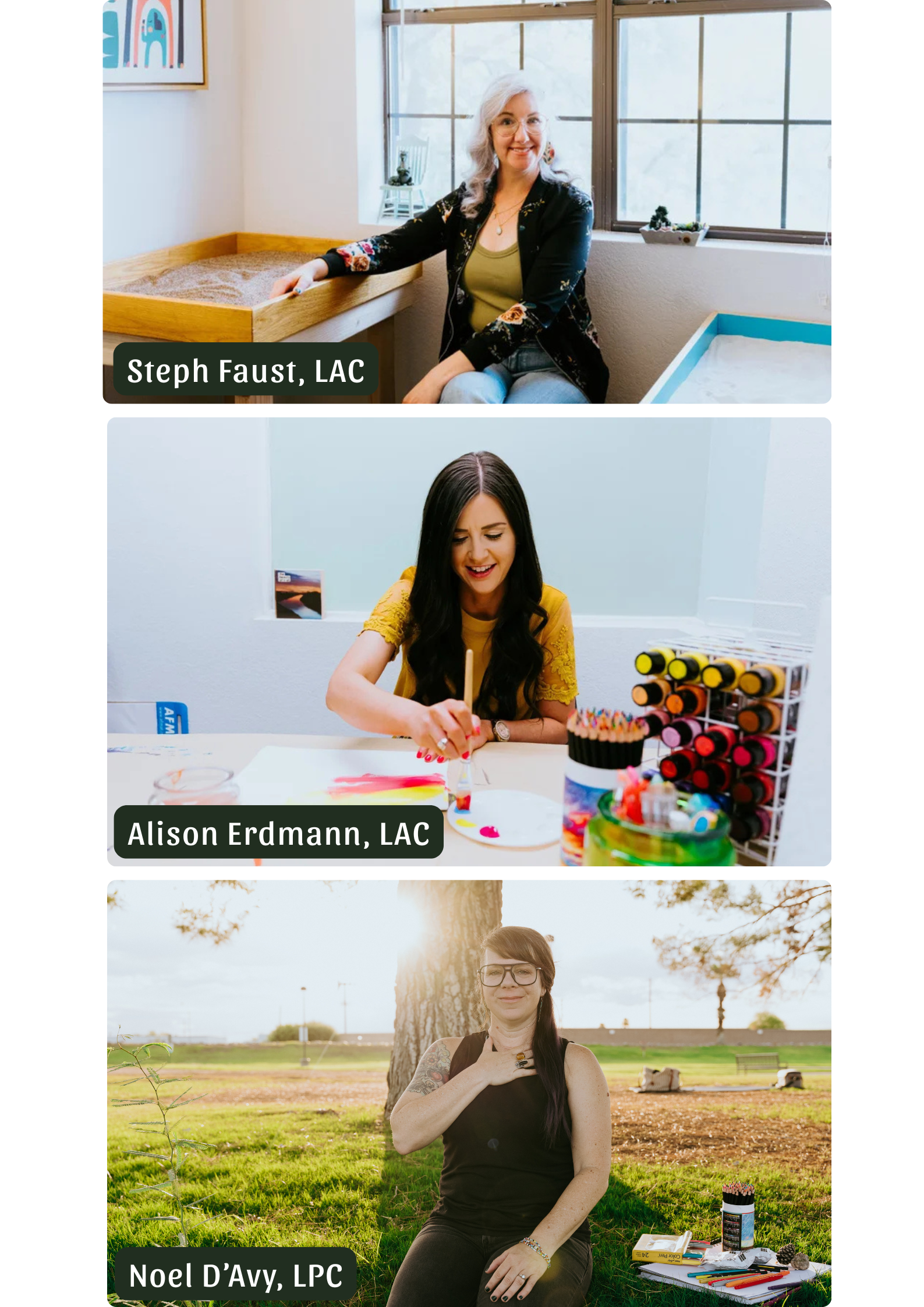
Creative Path Therapy is staffed by clinicians with advanced training in Play Art Therapy.
| Therapist | Intake | Per Session |
|---|---|---|
| Steph Faust, LPC | $175 | $155 |
| Alison Erdmann, LAC | $145 | $125 |
| Noel D’Avy, LPC | $200 | $180 |
| Low-Fee Openings | — | $50–$100 (limited availability) |
Low-fee slots require a consultation and may involve a waitlist.
Payment Options:
Credit card • Cash • Check • Thrizer
Policies:
24-hour cancellation policy | $75 fee for late cancellations/no-shows
Why Creative Path Therapy Is Arizona’ Home for Play Therapy
Unlike clinics that offer art therapy as a small add-on service, we’ve built an entire therapeutic experience around creativity. Our clients come from Mesa, Chandler, Gilbert, Tempe, Scottsdale, and surrounding communities to work with therapists who specialize in expressive arts and trauma-informed care.
A Dedicated Therapeutic Art Studio
We are one of the few practices in Arizona with a full art studio designed specifically for healing. This space allows clients to work with paint, clay, collage materials, and mixed media in an environment that feels safe, sensory-friendly, and welcoming.
Highly Trained Expressive Arts Therapists
Every therapist at Creative Path Therapy brings additional training in modalities that complement expressive arts, including:
EMDR
DBT
Sand Tray
Sensorimotor Psychotherapy
Play Therapy
IFS
CBT
This combination allows clients not only to express emotions creatively but also to process them through evidence-based methods.
How Play Therapy Helps Children?

Emotional Expression
Kids who struggle with words can express fear, anger, sadness, or confusion through drawing, painting, clay, sand tray, or play figures.

Nervous System Regulation
Sensory-based creative activities help children breathe more deeply, calm physically, express emotions, speak up about needs, and improve emotional control.

Behavior and Impulse Control
Through role play and guided activities, children learn problem-solving, frustration tolerance, and new behavior patterns. They get to practice with Therapists and family in session. The family also gains tools from this experience.

Trauma Processing
Play allows children to revisit overwhelming experiences at a pace that feels safe, without being pushed to disclose too much verbally. Kids naturally “Play it out” instead of speak it out. We provide the atmosphere and tools to invite them to do so when they are ready.

Identity and Self-Esteem Building
When kids move through something difficult or stuck and get through the struggle themselves, it often supports their developmental stage to grow and allows them to move into new skills with confidence. Play helps young clients feel seen and connected to themselves and feel their ability to impact their world in a meaningful way.
Our Unique Approach to Play Therapy

Developmentally Appropriate Techniques
We adapt tools based on age, cognitive level, and emotional readiness, ensuring each session feels engaging and safe.
Trauma-Informed Creative Work
Therapists use grounding, sensory regulation, and controlled expression to prevent overwhelm.
Integration of Evidence-Based Modalities
Play Therapy is supported by:
EMDR
Sensorimotor Psychotherapy
Sand Tray
Expressive Art Therapy
Parent Psycho-education
This combination strengthens emotional processing and long-term healing.
Strong Parent Involvement
Parents learn what behaviors to expect, how to support their child at home, and how their own responses encourage new dynamics.
The Creative Path Art Studio Advantage
We are one of the few Arizona practices with a studio designed for expressive arts.
This enriches the therapeutic experience with:
Painting stations
Clay and sculpture tools
Sand Tray worlds
Mixed-media arts
Sensory materials for grounding
Safe and Welcoming Environment
Our team works from a place of gentleness, curiosity, cultural awareness, and deep respect for each child’s inner world.
At Creative Path Therapy, Play Therapy is not a stand-alone method. It is part of a holistic therapeutic framework that blends creativity with neuroscience and trauma-informed care.
Below is how we tailor our approach:
FAQs About Play Therapy
Here are answers to common questions our new clients ask:
-
Yes. Children ages 5-13 benefit most because of their developmental needs that encourage play as a primary outlet for expression and cognitive integration. It allows them to express emotions nonverbally, reduce pressure to “talk about everything,” and process stress or trauma through the body and imagination.
-
Not at all. Play Therapy focuses on expression, not skill. Children do not need talent or experience. The goal is emotional processing, creativity, and communication, not producing artwork.
-
Because trust can take time to build, most families notice positive shifts within 4–8 sessions, depending on the child's needs and consistency. Deep trauma or long-standing behavior concerns may require longer, but progress builds steadily with regular participation.
-
Depending on the age and the needs, parents are involved in various ways. Some kiddos need their parents present for every session and some come for half the time. Parents are part of the change and treatment. Parents are involved through check-ins, guidance, and insight-sharing to various degrees. Involvement may increase for younger children or reduce for teens who need privacy.
-
Yes. Play offers safe symbolic space for processing, helping children explore their thoughts and emotions at their own pace. When more support is needed, it can be paired with EMDR, somatic work, or mindfulness.
-
It is especially effective for anxiety, depression, trauma, behavioral struggles, divorce, adoption, grief, ADHD symptoms, emotional dysregulation, sibling conflict, and school-related stress.
-
We integrate Play Therapy with EMDR, Expressive Art Therapy, Sensorimotor Psychotherapy, and a fully equipped art studio. This multidimensional approach supports emotional expression, sensory regulation, and allows us to shift with the needs in many ways.
-
Most children attend weekly to biweekly. For acute trauma or severe behavioral concerns, we encourage a weekly pace. Therapists adjust frequency based on goals and progress.
-
Item descriptionYes. Play can help children explore all the emotions that come up without judgement or pressure, and in a way that normalizes the needs.. It provides stability and emotional safety during major family transitions.