Sensorimotor Psychotherapy in Mesa, Arizona
Sensorimotor Psychotherapy in Arizona at Creative Path can help in healing from trauma, anxiety, or chronic stress. This approach supports nervous system regulation and deeper healing. If your body holds stress, start here with guided support.
Healing from trauma requires more than talking about the past. The body holds memories of fear, hurt, and overwhelm. When words are not enough, a therapy that works with the body and the mind together becomes essential. Sensorimotor Psychotherapy is one of the most advanced trauma treatments available today and Creative Path Therapy is proud to offer it as a core service to clients across Arizona.
At Creative Path Therapy, our clinicians integrate Sensorimotor Psychotherapy with expressive arts, EMDR, IFS because they are evidence-based mental health interventions. This approach supports clients in releasing survival responses held in the body so they can feel grounded, safe, and connected again.
This page explains what Sensorimotor Psychotherapy is, who benefits, how our therapists apply it, what to expect in sessions, pricing details, FAQs, and how to begin your healing journey with us.
Pricing, Fees, and Appointment Details
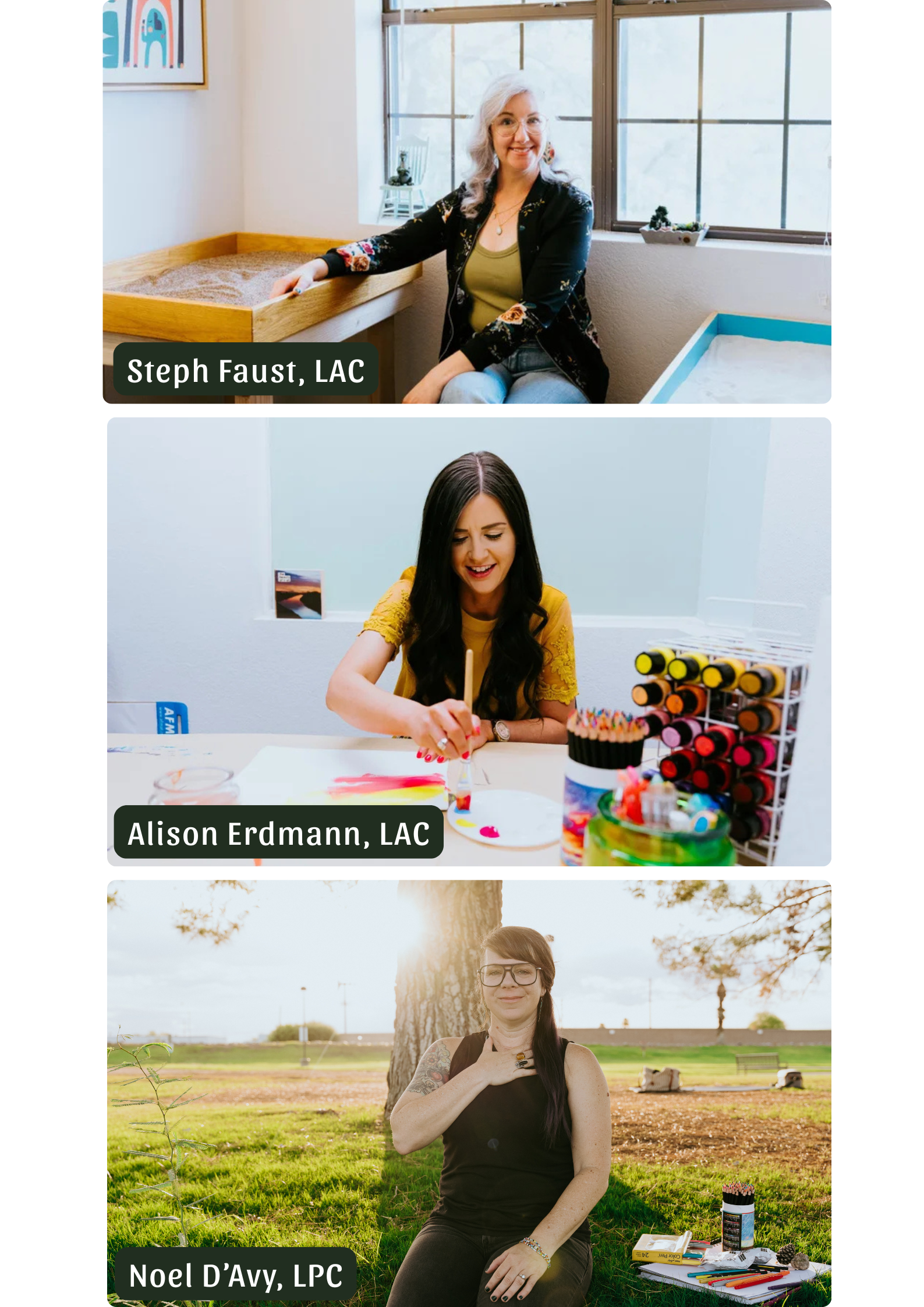
| Therapist | Intake session | Standard session |
|---|---|---|
| Steph Faust, LPC | $175 | $155 |
| Noel D’Avy LPC | $200 | $180 |
| Low-Fee Openings | — | $50–$100 (limited availability) |
Low-fee spots from 50 to 100 per session are available through a consultation and may involve a waitlist. Sessions last 50 to 60 minutes unless otherwise noted.
Payment methods include credit cards, checks, cash, and Thrizer.
A 24-hour cancellation policy applies. A missed session without notice incurs a $75 charge.
What Is Sensorimotor Psychotherapy
Sensorimotor Psychotherapy is a body-centered trauma treatment developed to help people process unresolved stress, fear, and emotional wounds by observing and understanding bodily sensations and helping the stress release from the body. Instead of focusing only on thoughts and emotions, this method includes posture, breath, muscle tension, movement, patterned responses, and physical impulses.
Trauma often lives in the body long after an experience is over. Sensorimotor Psychotherapy gently helps clients complete stuck survival responses, calm the nervous system, and rebuild a sense of internal safety.
This approach is beneficial for clients who struggle to talk about their trauma or who feel overwhelmed when discussing their past. By focusing on the body’s reactions, therapy becomes less triggering and more empowering. We practice mindfulness with a slow intentional focus on the body. We slowly rebuild a strong trusted relationship with the body that is often speaking about the need for protection and safety.
Who Benefits From Sensorimotor Psychotherapy
Clients of all ages can benefit, including children, teens, young adults, adults, and older adults. The method is appropriate for anyone who has difficulty regulating emotions or feels disconnected from their body.

PTSD and Complex Trauma
Helps release fight, flight, freeze defenses through the body and invites a deepening sense of self-trust.

Anxiety Disorders
Supports the nervous system in returning to a regulated state by releasing tension and finding calm.

Relationship Trauma
Reconnects to parts of self that have been injured or ignored and invites them to get their needs met.

Depression
Helps clients reconnect with movement, energy, and embodiment of the self.


Dissociation
Helps clients build return to the present and an increased connection to self.
Childhood Trauma
Offers a gentle presence to the young parts that have unmet needs for protection, belonging, support, and comfort.
Creative Path Therapy’s Approach to Sensorimotor Psychotherapy

Our approach includes:
A Strong Foundation of Safety
Before beginning any body-centered work, our therapists help clients build emotional and physical safety. This may include grounding exercises, art-based regulation, imagery work, or mindful movement.
Integration With Expressive Arts and Somatic Creativity
We often introduce body focused work with expressive arts because we can use art to track what is happening in the body more easily. Clients may explore movement, texture, color, or symbolic art as part of understanding their body's stored patterns. This enhances the effectiveness of somatic work by giving the body nonverbal outlets for expression.
Trauma-Informed, Culturally Sensitive Care
We support clients from diverse backgrounds, including LGBTQIA+ individuals, queer couples, teens, children, parents, and families. Our therapists respect cultural values, identity considerations, and spiritual beliefs.
A Gentle, Non-Re-traumatizing Method
At Creative Path Therapy, we never push clients into intense memories. The body leads the pace and we slow down to gather more resources as needed. The therapist follows the client's internal rhythm to ensure healing feels safe and empowering.
Processing trauma is naturally uncomfortable and causes distress. The therapist cares for this process by making sure the client has enough resources to safely move through the distress and this is a conversation we are having together.
Creative Path Therapy is unique because we combine Sensorimotor Psychotherapy with Expressive Art Therapy, EMDR, IFS, Play Therapy, Eco-Therapy, and Sand Tray Therapy. This creates a deeply personalized path for each client.
FAQs About Expressive Sensorimotor Psychotherapy
Here are answers to common questions our new clients ask:
-
Sensorimotor Psychotherapy focuses on how trauma affects the body. It is a bottom-up process, meaning we start with what the body is saying, not the thoughts about it. Clients explore sensations, posture, and impulses instead of relying only on words. This approach helps release stored survival responses and makes trauma processing more tolerable.
-
No prior body awareness is needed. Your therapist gently teaches you how to notice sensations without judgement. It can take time to get comfortable with listening to your body and we recognize this is often because of how trauma is involved. We practice new mindful techniques and strategies to support the need to become more and more aware of your body. Even small observations can guide significant healing and help you understand emotional patterns.
-
Yes, it is designed for complex trauma and chronic stress conditions. The method emphasizes stabilization and emotional safety. Therapists go slowly so clients remain grounded and avoid overwhelming experiences.
-
Yes. Listening to the body through this modality helps clients experience reduced anxiety as they can take ownership of caring for their nervous system. As clients learn to identify stress signals and learn ways to support their body, anxious thoughts naturally decrease and emotional resilience grows.
-
Duration varies by client. Resources can be gained within a few months. To engage in past trauma work, at least 6 months to a year is often needed. You and your therapist will discuss and create a plan that fits your goals, timeline, and comfort level.