Expressive Art Therapy for Teens in Arizona | Creative Path Therapy
Teenage years are a period of rapid emotional, social, and neurological development. Many teens experience intense emotions, identity questions, academic stress, and social pressures. At times, these experiences can become overwhelming, leading to anxiety, sadness, withdrawal, or difficulty expressing feelings.
Traditional talk therapy can be helpful, but many teens struggle to put their emotions into words. Expressive Art Therapy offers an alternative path where creativity becomes a powerful tool for emotional expression and self-discovery, and playfulness.
At Creative Path Therapy in Arizona, Expressive Art Therapy s provides a supportive and non-judgmental environment where young people can explore their emotions through art, movement, writing, and other creative activities. This approach helps teens process feelings, build confidence, explore creative tools that work best for them, and develop healthier coping strategies.
Understanding Emotional Challenges in Teens
Adolescence is often accompanied by emotional ups and downs. Hormonal changes, social expectations, and academic pressures can make this stage of life particularly complex.
Some common challenges teens may face include:
Anxiety related to school or social situations
Depression or persistent sadness
Low self-esteem or body image concerns
Difficulty managing anger or frustration
Social withdrawal or isolation
Stress from family conflict or life transitions
Traumatic events that cause intense fear, anxiety, or depression.
When teens struggle to communicate their feelings directly, creative expression offers a safe and natural outlet.
What Is Expressive Art Therapy?
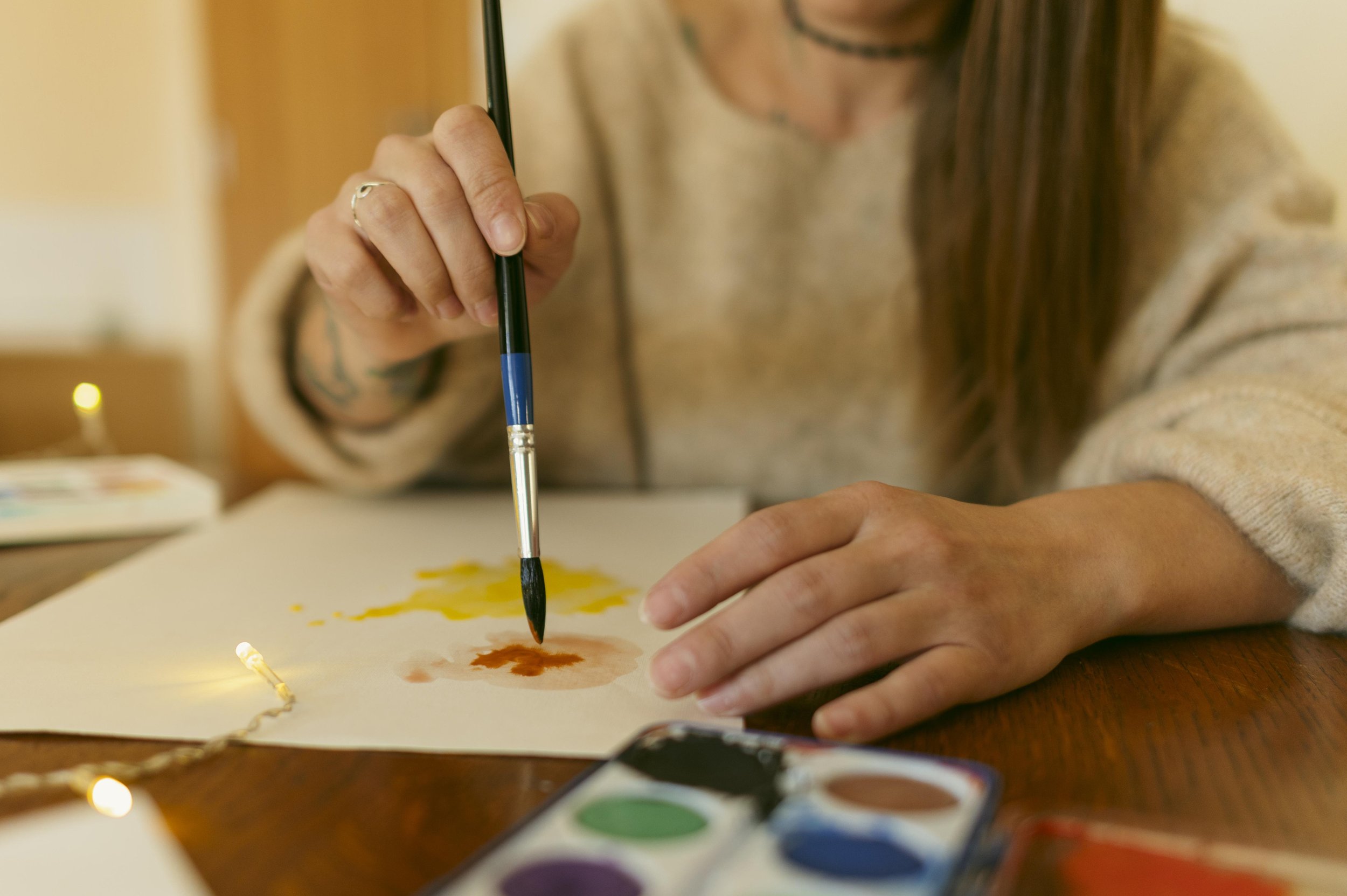
Expressive Art Therapy is a therapeutic approach that uses creative tools and sensory exploration to help individuals explore thoughts, emotions, experience, and meaning.
Unlike traditional art classes, the focus is not on artistic skill or producing good artwork. Instead, the emphasis is on the creative process and what it reveals about a person’s internal experiences, as well as how the process serves the mind and body.
Expressive Art Therapy may includes:
Drawing and painting
Creative journaling or storytelling
Collage and symbolic imagery
Music and rhythm exploration
Movement or body awareness exercises
Playful art-making games
Sculpture
Coloring
Our Art Studio invites teens to express emotions that may feel difficult to communicate verbally.
Why Expressive Art Therapy Works Well for Teens
Many teenagers find creativity more comfortable than direct emotional conversations. Art-making can serve as a bridge between internal experience and external expression.
Benefits of Expressive Art Therapy for Teens
| Benefits | How It Helps Teens |
|---|---|
| Emotional expression | Provides a safe outlet for difficult feelings. |
| Self-awareness | Helps teens understand their emotions and behaviors and what fits. |
| Stress reduction | Creativity can increase sense of calm or joy in the nervous system. |
| Confidence building | Encourages self-expression without judgment. Teens identify what works best for them. They get to choose. |
| Communication skills | Helps teens share emotions more openly with the tools they feel connected to. |
Expressive Art Therapy can also make the counseling process feel less intimidating and more engaging. Many teens and pre-teens say they enjoy therapy because of the options they get to explore in the Art Studio.
How Expressive Art Therapy Sessions Work

At Creative Path Therapy, sessions are structured to help teens feel comfortable, supported, and respected.
A typical session may include:
A brief conversation about how the teen is feeling that day
A creative prompt to support the teen’s emotions and needs.
Reflection and discussion about the artwork or creative process
Homework discussion about how they can bring insights into difficult areas at home or school.
The therapist adapts activities based on each teen’s personality, interests, and emotional needs. We work together with the teen to check out the prompts and creative supplies that can support their needs.
Emotional and Developmental Benefits
Expressive Art Therapy supports teens in multiple areas of emotional development.
1. Emotional Benefits
Increased emotional awareness
Healthier ways to express frustration or sadness
Reduced feelings of isolation
2. Social Benefits
Improved communication skills
Greater empathy and understanding of others
Increased confidence in relationships
3. Cognitive Benefits
Improved problem solving
Enhanced creativity
Stronger sense of identity and personal values
These benefits help teens develop emotional resilience as they navigate adolescence.
Who Can Benefit From Expressive Art Therapy?
Expressive art therapy can help teens experiencing a wide range of challenges.
Common Concerns Addressed
| Concern | How Therapy Helps |
|---|---|
| Anxiety | Creative expression reduces stress and promotes relaxation. |
| Depression | Art helps teens process sadness and reconnect with other emotions. |
| Low self-esteem | Creative exploration encourages self-acceptance, strengths, and individual needs. |
| Academic stress | Art activities provide emotional and tension release supporting the mind/body connection |
| Social challenges | Therapy builds communication skills and sense of self-trust and confidence. |
| Traumatic Incident | Creative exploration invites soothing and calming resources to support intense symptoms to help prepare for processing. |
Because the approach is inherently creative and flexible, it can be adapted to each teen’s unique needs.
What Parents Can Expect
Parents often wonder what their role will be when their teen begins therapy.
At Creative Path Therapy, the process typically includes:
Initial discussions about the teen’s emotional needs
Collaboration with parents when appropriate
Respect for the teen’s privacy and emotional space
Attending some sessions, when teen is ready to share
Creating together during sessions to try out new tools.
The goal is to create a supportive environment that encourages growth while maintaining trust between the teen and therapist.
Creating a Safe and Supportive Environment
Teens are more likely to engage in therapy when they feel safe and respected.
Creative Path Therapy focuses on:
Non-judgmental support
Age-appropriate creative activities
Respect for each teen’s pace and comfort level
Encouragement of self-expression and personal insight
This approach helps teens feel empowered rather than pressured.
Long-Term Impact of Creative Therapy
Expressive art therapy does more than address immediate emotional challenges. It also equips teens with lifelong skills for emotional wellbeing.
Teens learn to:
Recognize and understand their emotions
Express feelings in healthy ways
Use creativity as a coping tool
Build resilience during stressful situations
These skills can support mental health well into adulthood.
Final Thoughts
Adolescence is commonly a complex and emotionally intense stage of life. Teens often need safe spaces where they can explore their thoughts and feelings without judgment.
Expressive Art Therapy offers a creative and supportive way for teens to express themselves, process difficult emotions, and develop confidence in who they are becoming, and how they engage safely with their emotions.
At Creative Path Therapy in Arizona, Expressive Art Therapy helps teens transform creativity into a pathway for emotional growth, self-understanding, and resilience.
FAQs
1. What age group can benefit from expressive art therapy for teens?
Expressive art therapy is generally suitable for adolescents between the ages of 12 and 18. Activities are adapted to match each teen’s developmental stage and emotional needs.
2. Does my teen need to be good at art to participate?
No artistic skill is required. The focus is on self-expression and exploration rather than artistic ability. They may have a specific way they currently enjoy being creative, and that can always be integrated into Expressive Art Therapy.
3. How long does Expressive Art Therapy usually take?
The duration varies depending on each teen’s needs. Some teens benefit from short-term support, while others may engage in therapy for several months to address deeper concerns.
Teens often need at least 3-6 months of consistent support. We recommend planning for 6 months-year, as it can take time to build trust and feel comfortable enough to express harder things.
4. Can Expressive Art Therapyhelp with anxiety and stress?
Yes. Creativity can reduce stress, support emotional regulation, and help teens process anxious thoughts in a safe way.
5. Will parents be involved in therapy sessions?
Parents may participate in initial consultations or occasional discussions when appropriate. However, maintaining the teen’s privacy is also an important part of building trust in therapy.
We will discuss the need for family sessions as the need comes up. We hope to include the family as much as possible in order to support the teen’s needs in a more holistic way.
6. Is Expressive Art Therapy combined with other therapy methods?
Yes, Expressive Art Therapy can be used to support EMDR processing, and can be a gentle way to check in with body sensations and somatic practices. This integration all depends on the needs of your teen.
